

Growing a business without systems is like trying to bake macarons without a recipe — technically possible… but you’re definitely going to cry at some point.
If you want predictable revenue, consistent delivery, and a business that doesn’t fall apart the second you take a vacation (yes, you deserve one), then you need strong small business systems long before you hit “scale mode.”
Let’s break down the five systems that separate the chronic hustlers from the businesses that actually grow without burning out their founders.
“Systems don’t limit your freedom — they create it. Build them right, and your business runs even when you’re off living the story you actually want to tell.”
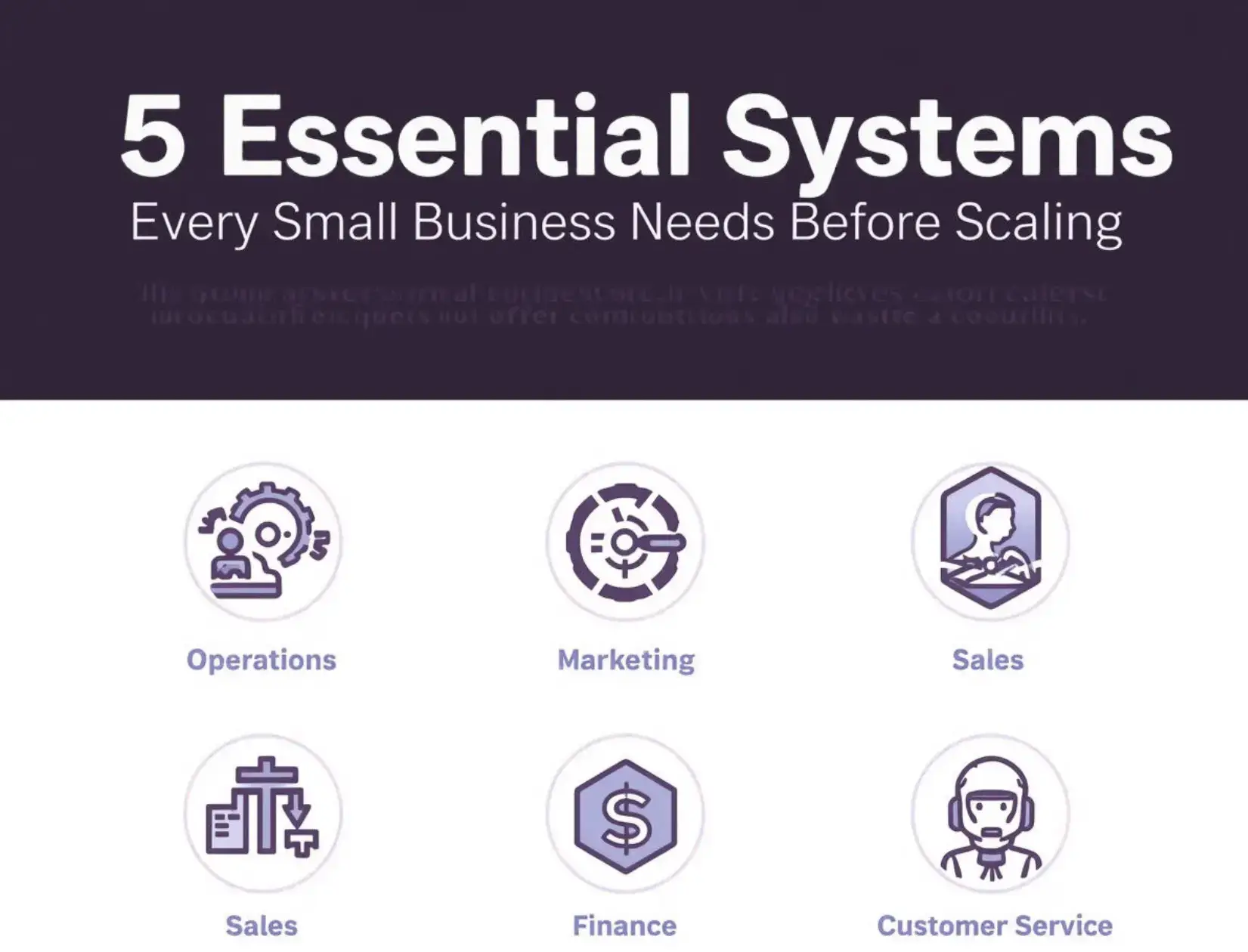
This is your business backbone — the place where efficiency lives, chaos goes to die, and delegation becomes a lifestyle.
Your operations system should include:
SOPs for every recurring task
Project management workflows (ClickUp, Asana, Trello, Notion — pick your flavor)
Quality control and client experience checklists
Onboarding + offboarding processes
Contractor and employee guidelines
A strong operations system frees up your time so you can focus on strategy, innovation, and — let’s be honest — avoiding the inbox from hell.
Scaling requires consistent visibility — not “post when inspiration hits, Mercury is in retrograde, or Starbucks messes up my latte.”
Your marketing system should:
Clarify your brand message
Define your content pillars
Map weekly + monthly content plans
Automate distribution (hello, AI repurposing!)
Track performance and conversion metrics
When small business systems include marketing automation, leads don’t dry up the moment you get busy.
Your business shouldn’t rely on you repeating the same script 50 times a week. A sales system turns your process into a machine that nurtures and converts on autopilot.
A powerful sales system includes:
Lead tracking CRM
Automated follow-ups
Pre-qualification questions
AI sales assistant (Meta Ads Manager’s new feature is a game changer)
Proposal + contract templates
A clear client journey
With the right small business systems, sales becomes predictable instead of accidental.
Scaling without financial structure = tax season tears and expensive surprises.
Every business needs:
Monthly P&L reviews
Cash flow visibility
Budgeting system
Pricing evaluation
Automated invoicing + payment collection
A CFO-level dashboard (even if you’re the CFO for now)
A sound financial system ensures you’re not scaling problems, you’re scaling profit
Your brand grows through reputation, retention, referrals, and relationships — not just ads.
Your CX system should:
Personalize touchpoints
Automate onboarding + welcome sequences
Deliver consistent communication
Request feedback + reviews
Track customer satisfaction
Map the entire journey from awareness → loyalty
Businesses with world-class small business systems win because they make clients feel seen, supported, and understood.
Because without them:
You can’t scale without stress
Your team can’t help you effectively
Your marketing becomes inconsistent
Your clients don’t get a reliable experience
You’re stuck in firefighter mode instead of CEO mode
With them?
You build a business that grows… even when you’re in Hawaii sipping something with a tiny umbrella.
Small business systems are the documented processes, workflows, and tools that help you operate efficiently and grow sustainably. Without them, scaling leads to chaos, inconsistent delivery, and bottlenecks.
Start with your operations system, because it creates structure and consistency in everything else — sales, marketing, finances, and client delivery.
Systems automate repetitive tasks, reduce decision fatigue, and allow your team to share responsibilities so you’re not the only one keeping the business together.
The best time is before you feel ready — ideally before hiring your first employee or onboarding your next batch of clients.
Absolutely. AI tools streamline content creation, automate follow-ups, manage workflows, and enhance customer experience with personalized touchpoints.